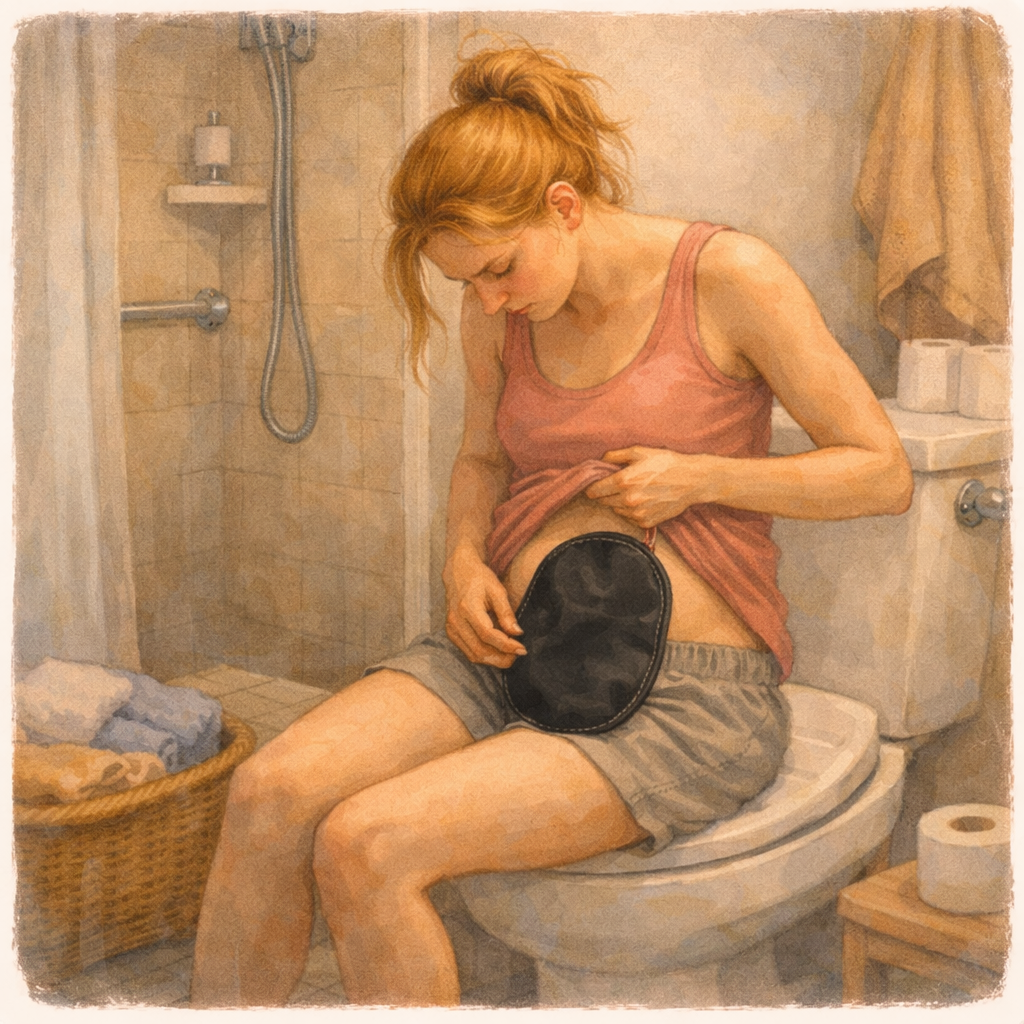
There are parts of living with a parastomal hernia and an ileostomy that never make it into forms, assessments or polite conversations.
Bathing and toileting are two of them.
On paper, I have “access” to a bathroom. In reality, every wash and every toilet visit is a careful negotiation between risk, exhaustion, dignity and fear of ending up in A&E.
The Bath Seat Reality
I cannot get into the bath safely, I have to sit on a bath seat.
For me to get into the bath, assistance is required. A stool has to be carried into position, i then sit on the edge of the bath seat, my legs lifted safely over the bath edge by my husband. Because of my abdominal injury, I cannot assist in the way a healthy body would. Every movement has to be slow, deliberate and controlled.
Once I’m in the bath, the shower head has to be positioned high so the water can reach me. Even then, it often only reaches my legs. My upper body remains cold and inadequately washed because repositioning the shower is not an option due to my height and being unable to safely reach for the shower head to lower it.
Standing to Wash Is Not Optional and Not Safe
To wash my hair properly, I have no choice but to stand.
Standing places significant pressure through my abdomen. With a parastomal hernia, this pressure is not just uncomfortable, it is dangerous for me. Stretching, reaching or holding my arms above my head to rinse my hair increases hernia pressure and often triggers nausea. Then the hernia ‘kicks’ begin, my muscles reminding me of their weakness.
Nausea is not something I can ignore. For me, it can be a warning sign that bowel may be becoming trapped, a medical emergency that requires immediate attention.
Every time I stand to wash my hair, I am weighing cleanliness against risk.
Privacy and Safety Conflicts
The shower curtain does not close properly around the bath seat. For safety reasons, the bathroom door must remain unlocked in case I need assistance.
This creates its own distress, the risk of my children accidentally walking in while I am undressed, vulnerable and unable to move quickly. It strips away privacy at a time when I am already exposed and exhausted. It also means I cant relax fully, feeling rushed to just get the job done, just in case the door opens.
Getting Out of the Bath
By the time I’ve finished washing, I am already depleted.
Getting out of the bath is one of the most dangerous moments. I either attempt to step over the bath edge using the handrail and sink for support – significantly increasing my risk of falling or I wait for help.
Waiting means sitting cold, wet and uncomfortable. The stool becomes wet and slippery. A bath mat placed on it does not stay secure and can slide, adding further risk.
Nothing about this process is safe, dignified, or sustainable.
Lifting my leg high enough to get over the bath edge strains my abdomen and has in the past instantly popped the parastomal hernia out, causing pain, cramps and spams along with feeling dizzy, nauseous and hot.
Toileting With an Ileostomy Is Not Straightforward
Changing my stoma bag presents daily challenges that are rarely understood.
Previously, I would rest the black waste bag on the toilet seat, so I was close to the sink. This allowed me to empty and clean the appliance with some control.
With a raised toilet seat in place, I can no longer do this. I have to use the bath seat instead.
This means changing the bag further away from the sink. On more than one occasion, trying to move between the bath seat and the sink has resulted in faecal output spilling over my legs, feet, clothes, the bath mat and the floor.
That moment is deeply distressing. It strips away my dignity. I cry, I get frustrated that I even have an ileostomy, depression sweeps over me, I feel disgusting and alone in that moment.
And it doesn’t end there.
I then have to clean myself again, change my clothes again and clean the bathroom, all of which involves bending, twisting and straining my abdomen. These movements significantly increase the risk of my hernia becoming trapped.
Hygiene and Safety Collide
You are advised not to keep the toilet seat up when flushing diarrhoea for hygiene reasons. With a raised toilet seat, this becomes impossible and over time unsafe.
The raised seat helps me get on and off the toilet. Without it, my muscles cramp and I can become stuck on the toilet, sometimes during the night when everyone else is asleep and I cannot call out easily for help.
However, the handrails on either side of the toilet hinder emptying my stoma bag. I have to squat and slightly twist to get the angle right. Output frequently ends up on the raised seat, requiring further bending to clean it.
A comfort-height toilet would remove many of these issues. There would be no rim and diarrhoea would flush away properly. It would eliminate the need for temporary attachments and unsafe workarounds.
I have been told the toilet could be placed on a plinth instead. I do not believe this is a long-term or appropriate solution. It feels like another temporary layer added to an already compromised setup.
After Washing: The Risk Continues
After bathing or showering, due to the strain placed on my abdomen, I often need to lie down immediately.
Hernia pressure builds quickly and nausea can follow. For me, nausea is a serious warning sign. It can indicate that part of my bowel is trapped.
Lying down promptly and allowing gravity to help the hernia fall back into the abdomen is essential. Any delay increases the risk of emergency hospitalisation.
Trying to Stay Independent
I am actively trying to remain as independent as possible.
I have bought equipment so that I can dry and dress myself without needing hands-on assistance. Not because support isn’t available, but because independence matters. Dignity matters.
I want to be able to manage my personal care without every task becoming a two-person operation.
I have also explored installing a sink without a pedestal. This would allow me the option to sit on a stool while changing my stoma appliance, brushing my teeth, washing my hands or washing my face, reducing strain on my abdomen and improving safety.
This Is What “Managing Long Term” Really Means
Living with a parastomal hernia and an ileostomy is not just about equipment lists or clinical appointments.
It is about the moment-by-moment reality of your body, your home and your energy.
Right now, bathing and toileting are not simply inconvenient, they are risky, exhausting and emotionally draining.
This is not about comfort for comfort’s sake. It is about preventing injury, preserving dignity and making daily life manageable in a body that already carries too much.
This is my reality.
And it deserves to be understood.
This post reflects personal experience and reflection, not medical or professional advice.