I didn’t expect my tailbone to be the thing that complained.
But after months of living mostly reclined or flat on my back, protecting my abdomen, easing hernia pain, trying not to aggravate anything, my body has found another way to speak up.
My tailbone feels bruised. Deeply sore. Like I’ve fallen on it, even though I haven’t.
It’s the kind of ache that creeps in quietly. Not dramatic. Just persistent. A reminder that staying still for too long, even for good reasons, has its own consequences.
This is what living with a chronic condition teaches you:
Sometimes the very thing that helps one part of your body puts strain somewhere else.
Why it happens
When pain limits how you can move, your body adapts.
For me, that’s meant a lot of time reclined, lying back or resting. Flat positions that feel safest for my hernia and abdomen. But over time, that means the same small area of the body takes repeated pressure.
The tailbone isn’t designed to carry weight for hours and hours on end. So eventually it protests.
Not with injury. Not with damage. Just with that bruised, tender feeling that says: please spread the load a bit.
What’s been helping (gently)
Nothing dramatic. Nothing that involves pushing through pain or “fixing” anything.
Just small adjustments.
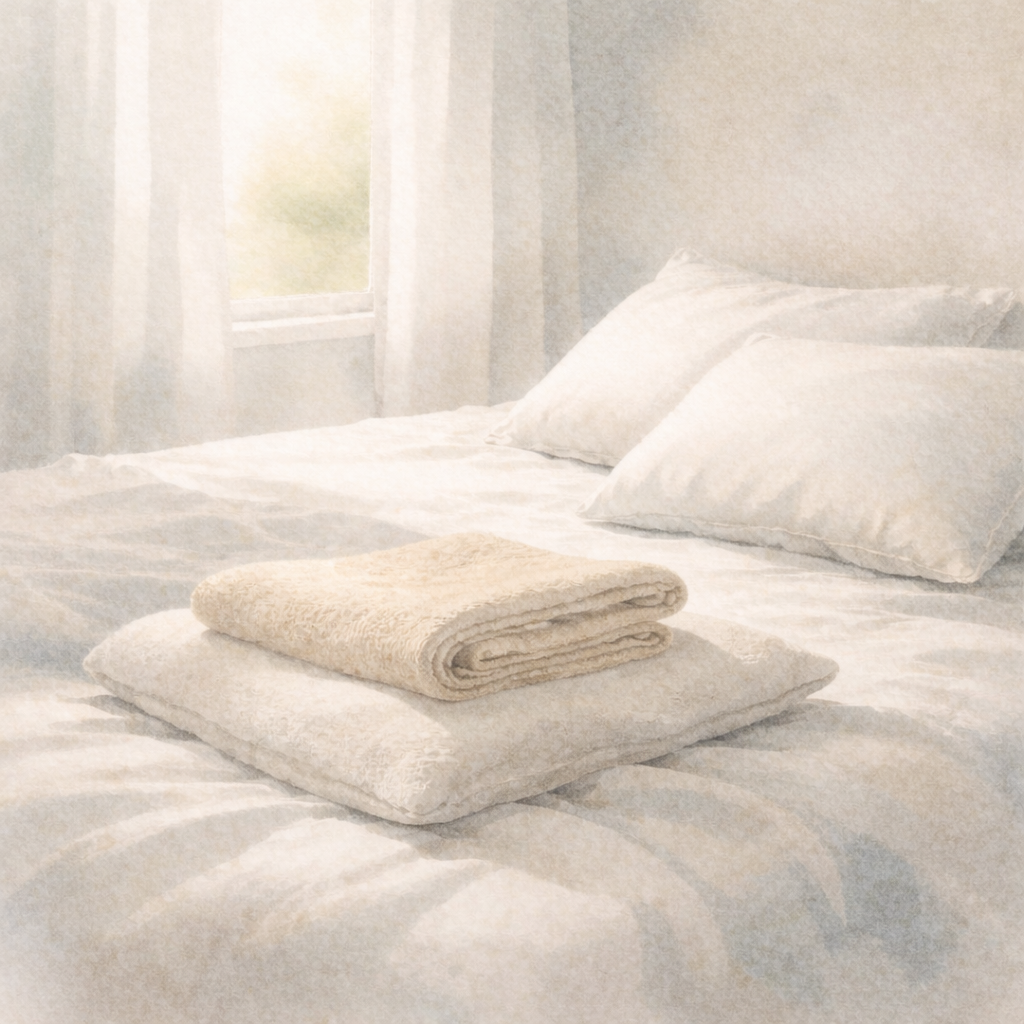
I’ve learned to support around my tailbone rather than underneath it, using pillows or folded towels so it can rest without bearing pressure.
A pillow under my thighs instead of my knees has helped too, subtly changing the angle of my pelvis so my weight isn’t landing in the same place every time.
Heat on dull ache days. Cold when it feels sharper.
Magnesium or arnica rubbed in gently — not to cure, just to soothe.
And tiny movements. The smallest ones. A slow exhale. A gentle flattening of my lower back into the mattress. A release.
Not exercise. Just a reminder to my body that it isn’t stuck.
The bigger lesson
This hasn’t been about doing more. It’s been about listening earlier.
Changing position before the pain builds. Shifting weight instead of staying frozen. Letting rest be flexible instead of rigid.
Living with a body that needs care is a constant balancing act. Support one area, then check in with the rest. Adjust. Adapt. Repeat.
There’s no failure in this. Just information.
If you’re in a similar place
If your body hurts in places you didn’t expect, especially after long periods of rest, it doesn’t mean you’ve done anything wrong.
It means your body has been working hard for you.
And sometimes, all it needs is a little redistribution of kindness.
This post reflects personal experience and reflection, not medical or professional advice.